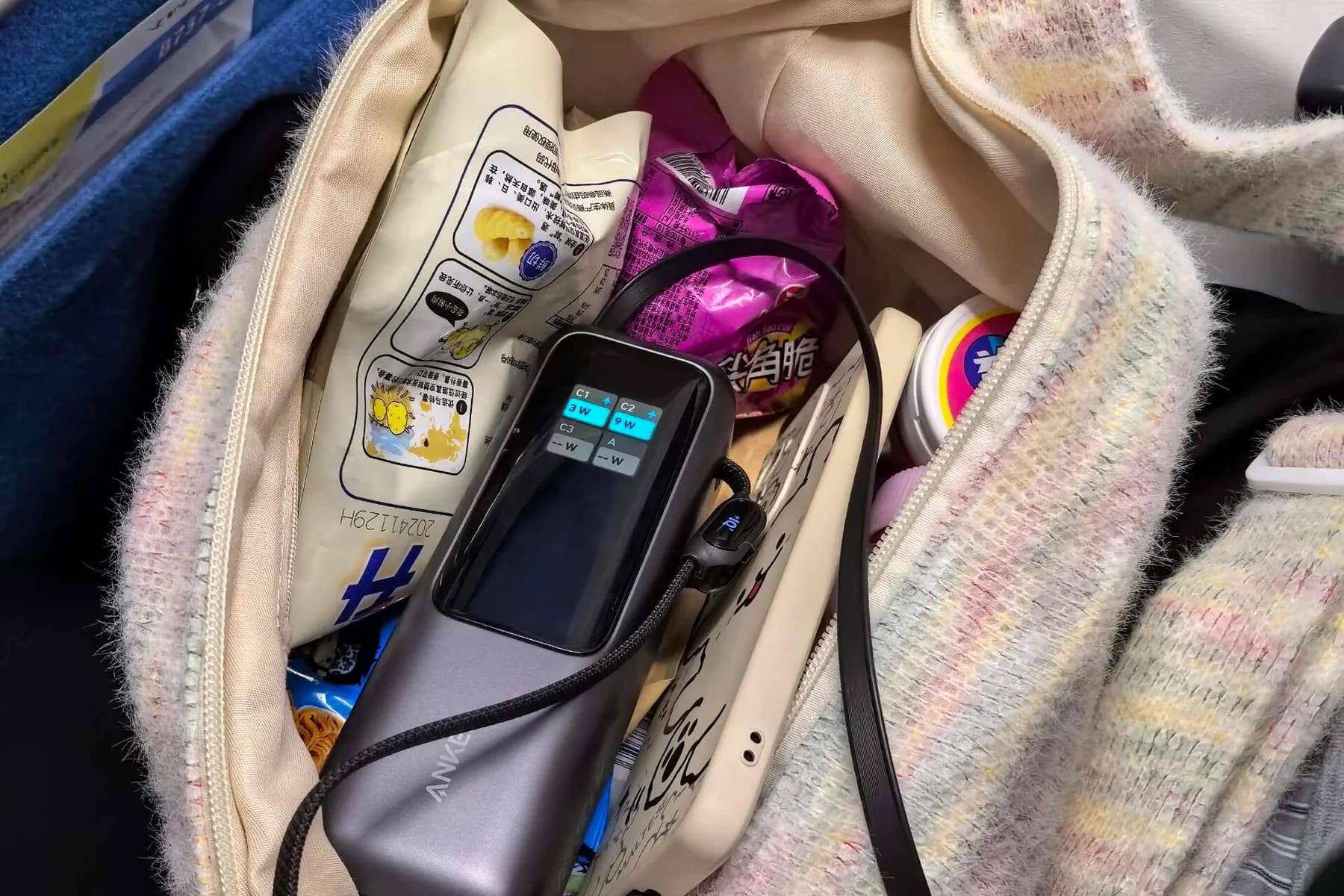
Answer Brief
The Answer, Briefly
On domestic flights in China, passengers may not carry power banks that lack a valid CCC marking (often called a 3C mark), have an unclear CCC mark, or belong to a recalled model or batch. The Civil Aviation Administration of China introduced the restriction from June 28, 2025. A power bank must also comply with lithium-battery capacity and airline rules, and it belongs in carry-on baggage rather than checked baggage.
For an international visitor, the crucial distinction is the flight segment. A power bank accepted on an international flight into China is not automatically accepted on a later domestic flight from Shanghai to Zhangjiajie, Beijing to Xi’an or Chengdu to another mainland city.
In This Guide
The China-Specific CCC Rule
The CCC mark is China’s compulsory product-certification mark. CAAC’s notice applies to domestic flights and prohibits three categories of power bank:
- a unit without a CCC mark;
- a unit whose CCC mark cannot be read; and
- a model or batch that has been recalled.
The rule is about the product in hand, not the traveler’s nationality or where the device was purchased. Many overseas power banks were manufactured for markets that did not require a printed CCC mark. Genuine quality, a familiar brand or an airline acceptance on another route does not replace the label requirement for a Chinese domestic security checkpoint.
Inspect The Power Bank Before Leaving Home
Find The Physical CCC Mark
Look on the case for the stylized CCC logo. It needs to be printed or otherwise permanently marked and readable. A product webpage, purchase receipt or photo of another unit is not the same as a visible mark on the device.
Do not add a homemade sticker or printed logo. Airport security decides whether the actual power bank complies, and a false certification mark creates a more serious problem than traveling without a battery.
Check The Watt-Hour Rating
The label should also show capacity. Airlines and security staff need a readable watt-hour value or enough electrical information to determine it. If a label lists milliamp-hours and voltage, the calculation is:
watt-hours (Wh) = milliamp-hours (mAh) × voltage (V) ÷ 1,000
For example, 20,000 mAh at 3.7 V equals 74 Wh. The arithmetic helps a traveler understand the label; it does not cure a missing CCC mark or guarantee carriage.
Check Recalls And Damage
Do not fly with a recalled, swollen, cracked, leaking or unusually hot power bank. Search the manufacturer’s current recall page using the exact model and batch information. If the label has worn away, replace the unit before the trip rather than hoping one airport will interpret it favorably.
Carry-On, Capacity And Airline Approval
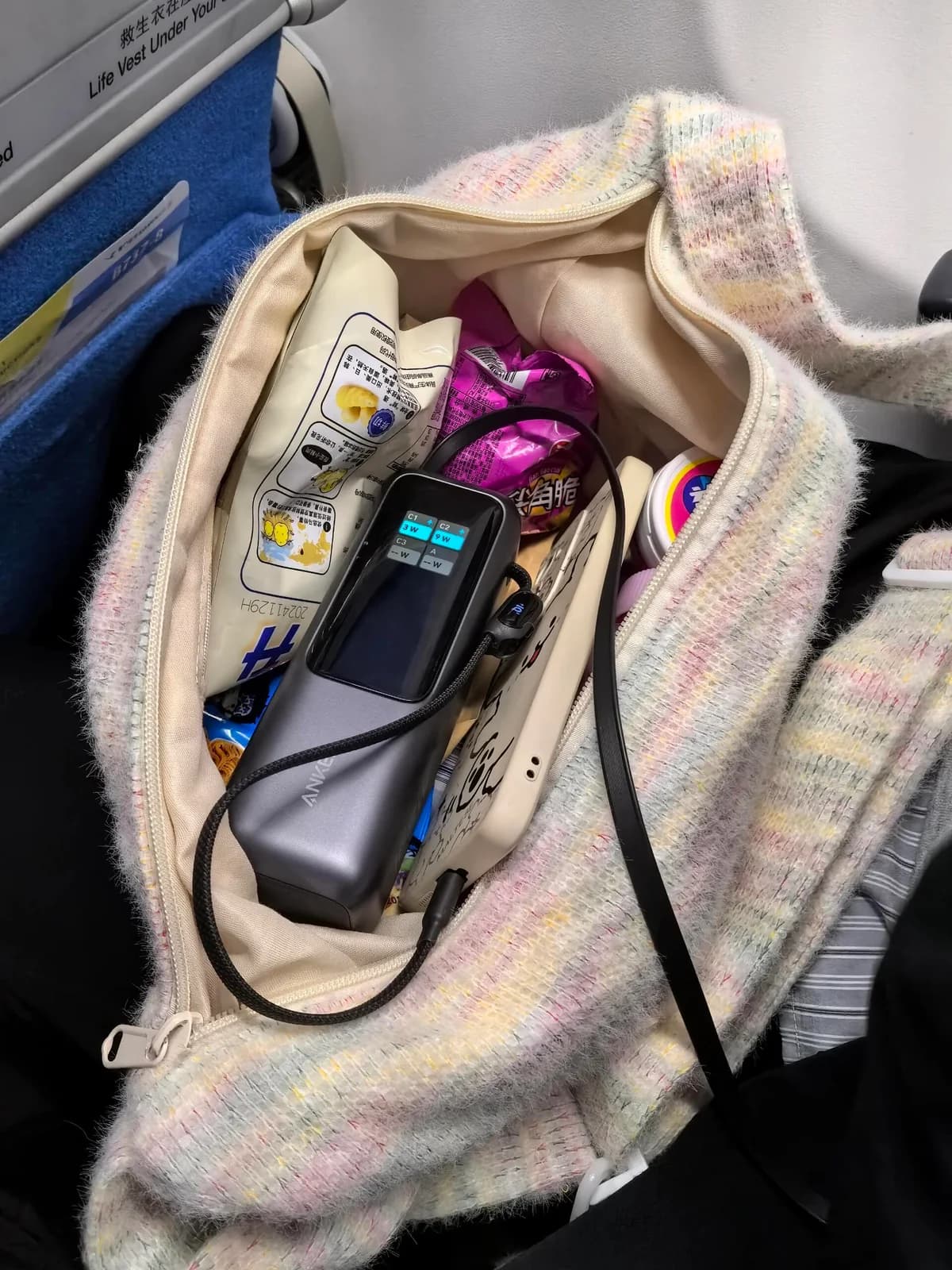
Power banks are treated as spare lithium batteries and should be carried in hand baggage, with terminals protected from short circuit. They should not be placed in checked luggage. Keep the unit accessible for security inspection rather than buried under equipment.
IATA’s passenger guidance updated in 2026 describes power banks up to 100 Wh as the standard passenger category and notes that larger 100–160 Wh units may require operator approval. Its detailed passenger material also describes a maximum of two power banks not exceeding 100 Wh under the updated guidance. Airlines may apply stricter rules, so the operating carrier’s current dangerous-goods page remains essential.
The safe planning sequence is:
- visible CCC mark for the mainland domestic segment;
- visible capacity and model information;
- carry-on baggage only;
- terminals protected from short circuit;
- no recalled or damaged unit; and
- written airline confirmation for anything outside the ordinary allowance.
What Not To Assume
“It Passed Security On My Inbound Flight”
International and domestic rules can differ. A device may reach China legally and still be refused on a mainland domestic departure because it lacks the required CCC mark.
“My Power Bank Is Under 100 Wh, So It Is Fine”
Capacity is only one test. On a Chinese domestic flight, the CCC and recall conditions still matter.
“I Can Move It To Checked Baggage”
No. Power banks are spare batteries and should not be packed in checked luggage. If cabin baggage is taken at the gate, remove the power bank and keep it with you.
“The Airport Will Store It Until I Return”
Some airports have announced temporary storage, mailing or disposal arrangements at particular times, but services vary by airport and may change. Do not build the plan around a storage service unless the exact departure airport confirms it for the travel date.
A Route-Level Packing Strategy
List every air segment, including domestic connections issued on the same ticket. A route such as Shanghai–Zhangjiajie–Shanghai includes two domestic security checks. AVIORA’s Shanghai and Zhangjiajie private route uses a domestic air connection, so the battery check belongs in pre-departure planning rather than at the gate.
If the device is non-compliant, the simplest solution is often to travel without it or obtain a compliant product from a reputable authorized seller, keeping the product information and receipt. AVIORA does not select or certify electronics, and airport security retains the final decision.
Power-bank compliance also supports the wider phone plan. Keep maps, driver contacts and hotel addresses offline, and review the planning FAQ for connectivity and arrival preparation. A battery is useful, but it should not be the single point of failure for meeting a guide or driver.
Airport-Day Checklist
- Confirm whether the next segment is domestic within mainland China.
- Read the CCC logo, watt-hour figure, model and manufacturer text without a magnifier.
- Check the exact model against current recall information.
- Pack the unit in hand baggage with terminals protected.
- Remove it if cabin baggage is checked at the gate.
- Do not use, charge or store the device in a way prohibited by the airline.
- Follow the operating carrier’s current limits even when they are stricter than general guidance.