All destinations
Ancient capital · north
Xi'an
Terracotta warriors, city walls and the eastern beginning of the Silk Road.
2–3 nightsHistory in context
Culture and historical context
China's ancient capital and the eastern threshold of the Silk Road
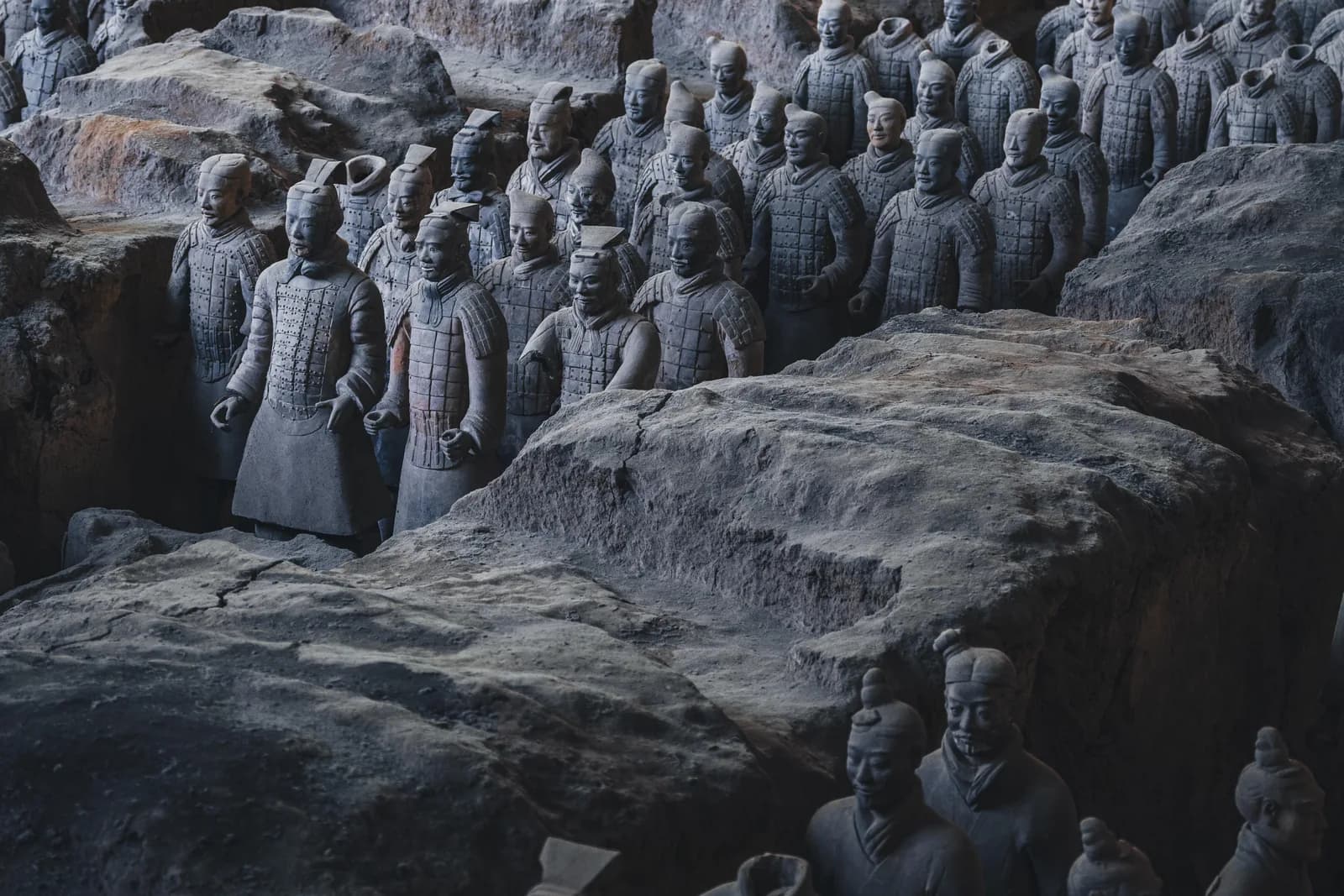
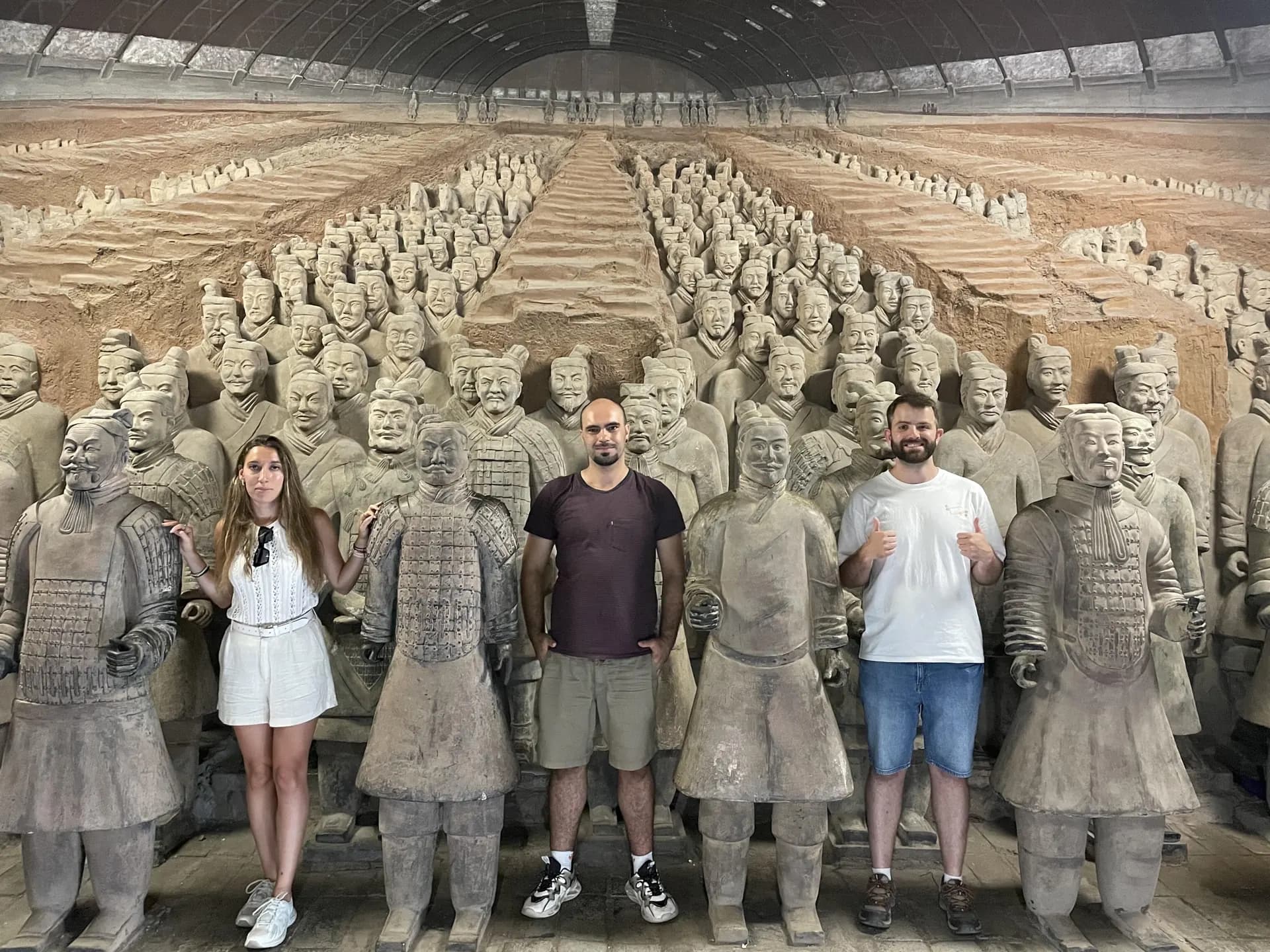
Known historically as Chang'an, Xi'an was the capital of several dynasties and one of the great cities of the ancient world. The Terracotta Army belongs to the unification story of the Qin, while later Tang-era history connects the city to trade, religion and cultural exchange across Eurasia.
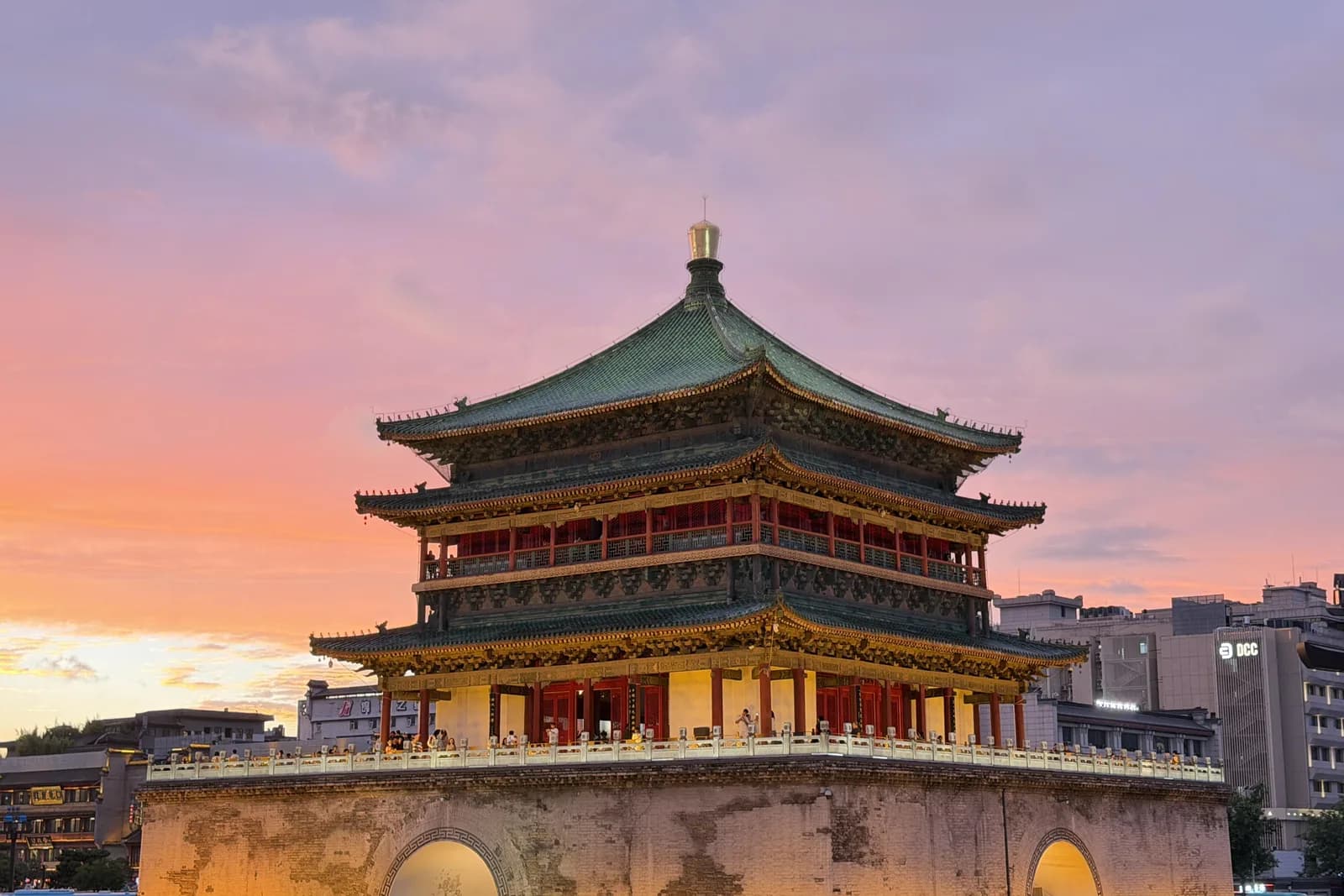
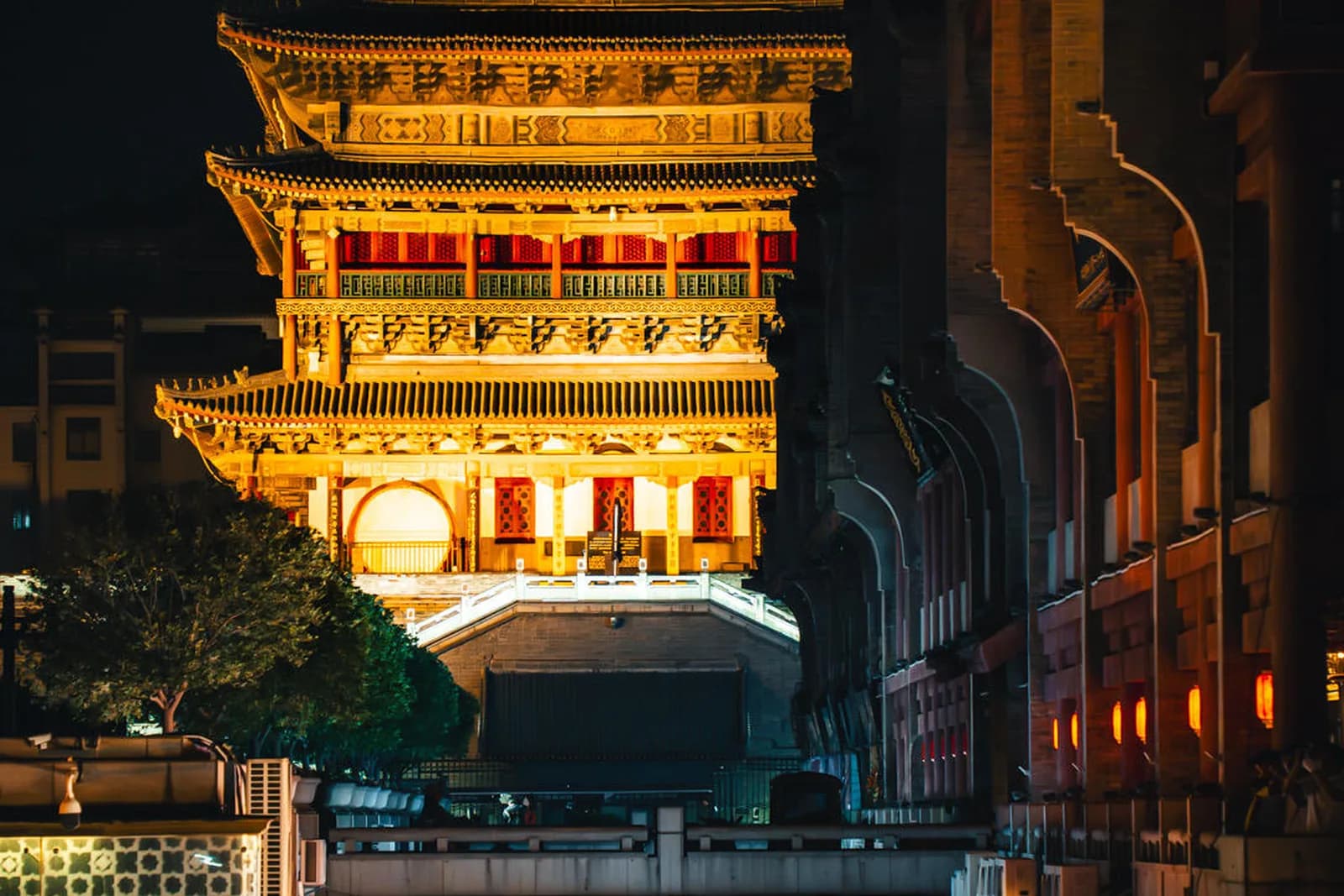
The surviving City Wall gives modern visitors an unusually clear sense of urban form. Inside and around it, mosques, markets, temples and newer districts show that Xi'an is not frozen in one dynasty. The city's value comes from seeing multiple historical layers rather than treating the warriors as its only reason to visit.
A real route including Xi'an
Private Terracotta Warriors Day Tour, Seamlessly Handled
1 private day · about 8 hours · Xi'an hotel · Terracotta Warriors · Xi'an Old City · Xi'an hotel
Why this destination
Why Xi'an belongs in the route.
Xi'an is where a first China itinerary gains historical depth. The Terracotta Army lies outside the center, while the City Wall, old lanes and food districts form a separate urban chapter. Two full days prevent the city from becoming a single museum stop.
We recommend 2–3 nights here. The right onward connection depends on your season, available time and the contrast you want from the next destination.
Food and social life
A wheat-based food culture shaped by migration and trade
Xi'an is known for hand-pulled and hand-torn noodles, flatbreads, dumplings and richly seasoned lamb dishes. These foods reflect northern agriculture as well as the city's long position on routes connecting China with Central Asia.
The Muslim Quarter is culturally significant, but it is also busy and commercial. A useful food walk distinguishes spectacle from substance, explains halal traditions and includes places where the cooking, not only the crowd, carries the story.
Signature experiences
What gives Xi'an its character.
Walk or cycle an appropriate section of the City Wall near softer morning or evening light
Explore the Muslim Quarter through food, mosque history and Xi'an's Silk Road connections
Suggested Xi'an itinerary
A realistic way to use 2–3 nights.
Day 1
The Qin dynasty
Terracotta Army with historical framing, followed by a calm return to central Xi'an.
Day 2
The living ancient city
City Wall, mosque and food traditions, with an evening chosen around energy levels.
Day 3
A deeper Xi'an
Add Tang history, a museum or a specialist archaeological site before the onward train.
When to go
Season changes the feeling.
March to May and September to early November usually offer comfortable conditions for archaeological sites and city walking. Summer can be hot, while winter is colder and often less crowded.
Planning notes
- Allow a half day for the Terracotta Army including the road transfer
- Discuss halal and other dietary requirements before a food-focused visit
- Use high-speed rail to connect with Beijing when the wider route allows it
Practical orientation for international visitors
How Xi'an works on the ground.
Arriving and connecting
Xi'an is commonly reached by high-speed rail from Beijing or by domestic flight. Xi'an North is the main high-speed rail station; the airport and archaeological sites are outside the central sightseeing area.
Getting around
Metro works well for parts of central Xi'an. Private transport is most useful for the Terracotta Army and for joining distant stops without losing the day to transfers.
Where and how long to stay
Stay near the City Wall or a convenient metro connection for evening access and simpler transfers. Two or three nights suit most first-time routes; add time if archaeology, food or Tang history is a major interest.
What first-time visitors often underestimate
The Terracotta Army is not in central Xi'an. Combining it with too many city attractions creates a rushed day and leaves little time to understand the site.
Private journeys including Xi'an
See how Xi'an fits into a considered route.
These are published AVIORA products, not generic route suggestions. Open any journey to review its day-by-day structure, included private services and planning options.
Photography being preparedRoute and service details are ready to plan1 private day · about 8 hoursPrivate Terracotta Warriors Day Tour, Seamlessly HandledXi'an hotel · Terracotta Warriors · Xi'an Old City · Xi'an hotelView journey  12 days / 11 nightsChina, Considered: Beijing, Xi'an & ShanghaiBeijing, Xi'an, ShanghaiView journey
  12 days / 11 nightsChina, Made for Families: Great Wall, Warriors & PandasBeijing, Xi'an, Chengdu, ShanghaiView journey Photography being preparedRoute and service details are ready to plan13 days / 12 nightsChina, From the Great Wall to Desert StarsBeijing, Xi'an, Yinchuan, Zhongwei, ShanghaiView journey
  11 days / 10 nights11-Day Beijing, Xi'an, Chengdu & Shanghai Private TourBeijing, Xi'an, Chengdu, ShanghaiView journey
  9 days / 8 nights9-Day Beijing, Xi'an & Shanghai Private TourBeijing, Xi'an, ShanghaiView journey 6 days / 5 nights6-Day Xi'an & Beijing Private TourXi'an, BeijingView journey
Xi'an travel FAQ
Clear answers before you choose the route.
Is one day enough for Xi'an?+
One day can cover the Terracotta Army but not Xi'an well. Two full days allow one archaeological day and one city day for the wall, historic neighborhoods and food culture.
Should I fly or take the train from Beijing to Xi'an?+
High-speed rail is often the simpler city-to-city choice once airport travel and security time are included. The right option depends on the complete route and available train times.
Is Xi'an suitable for Muslim travelers?+
Xi'an has a significant Muslim heritage and many halal food options. A well-briefed guide can add historical context and confirm suitable meals instead of relying only on a busy market walk.
Practical planning guides
Prepare for Xi'an with clearer answers.
History · 9 min readThree Days In Xi'an: A First-Time Itinerary Beyond The Terracotta ArmyA three-day Xi'an itinerary that treats the Terracotta Army as the beginning of the story, not the entire city.Travel Guides · 12 min readBest Apps For China Travel In 2026: What To Set Up Before You FlyThe practical order for setting up China travel apps, with backup methods for the moments when verification, data or a pickup pin fails.Travel Guides · 11 min readChina Packing List For 2026: What Foreign Visitors Actually NeedA route-aware China packing list that protects the first 24 hours and avoids assumptions about customs, batteries, medicine or one-phone travel.
Private China planning
Build Xi'an into the right private tour.
Share your dates, travelers and hotel expectations. We will recommend the right stay, onward connection and private service plan.