Answer Brief
The Answer, Briefly
When adult children plan a milestone trip to China for parents in their late 60s, 70s or 80s, they meet an uncomfortable fact fast: China is vast, visually stunning and physically demanding.
Travel brochures promote misty karst peaks in Guilin, the quartz-sandstone pillars of Zhangjiajie and high-altitude monasteries. What the photographs rarely show is the mechanics: long stretches of granite steps, walks from public parking plazas, summer humidity and altitude changes that stress the heart and sensitive joints.
Choosing well for older travelers means looking past the scenery and judging each destination on four practical points:
- Pavement, elevation gain and stair density.
- Step-free options: electric carts, cable cars and vehicle access close to the gate.
- Climate comfort and air-conditioned rest stops in the season you travel.
- Distance to a major hospital with English-speaking emergency support.
Here is a plain breakdown of China's main travel regions, to help you choose an itinerary that is rewarding and physically manageable. It is written for the 2027 travel season.
Short Answer: Where Should Senior Travelers Go In China?
The Destination Mobility And Safety Matrix
Use this matrix to compare how each hub fits your parents' physical capacity and healthcare needs. These are our planning judgments, not official ratings, and conditions change by season and by site.
| Region / City | Physical load and pavement | Accessibility options | Medical access | Suggested profile |
|---|---|---|---|---|
| Beijing | Moderate walking, wide plazas, some high stone thresholds | Higher: cable car and carts at some sites, with advance arrangement | Strong: international hospitals and clinics | Suits most seniors with careful pacing |
| Xi'an | Mostly flat, long museum corridors, paved city wall | Higher: carts and ramps at the main sites | Strong: large provincial hospitals | Good for deep history with few stairs |
| Shanghai | Flat river promenades, modern infrastructure | Very high: broad elevator coverage and smooth paving | Strong: international medical centers | Easy for most mobility levels |
| Chengdu | Gentle park paths, shaded bamboo, mild incline | Moderate to high: carts at the panda base | Good regional hospitals | A slow-paced cultural extension |
| Guilin / Yangshuo | Flat river travel, uneven village cobblestones | Moderate: boats are comfortable, docks have steps | Basic local clinics; transfers for major care | Scenic and relaxed if cave and hiking stairs are skipped |
| Zhangjiajie | Very demanding: cliffside stairs and narrow walkways | Low to moderate: cable cars exist, queues and stairs remain | Limited care in remote park zones | High risk for joint-sensitive travelers |
| Yunnan (Shangri-La) | High altitude (over 10,000 ft), uneven old stone streets | Low: old towns restrict vehicle drop-offs | Basic care; altitude-related risks | High risk; needs medical advice and close monitoring |
Tier 1: The Golden Triangle, Our Benchmark For Senior Comfort
For most families traveling with aging parents, the classic corridor of Beijing, Xi'an and Shanghai delivers the most historical depth for the least physical strain. Beijing brings the imperial landmarks and a step-free route to the Great Wall. Xi'an brings flat archaeological sites and an easy way to see the city wall. Shanghai brings waterfront promenades and a comfortable finale close to major medical care.
1. Beijing: Imperial Splendor Without Foot Strain
- Mobility level: Moderate; it needs structured pacing.
- The reality: Beijing's landmarks are immense. The Forbidden City covers about 180 acres and involves close to a mile of walking over old flagstones, with raised wooden door thresholds that are a challenge for any older knee.
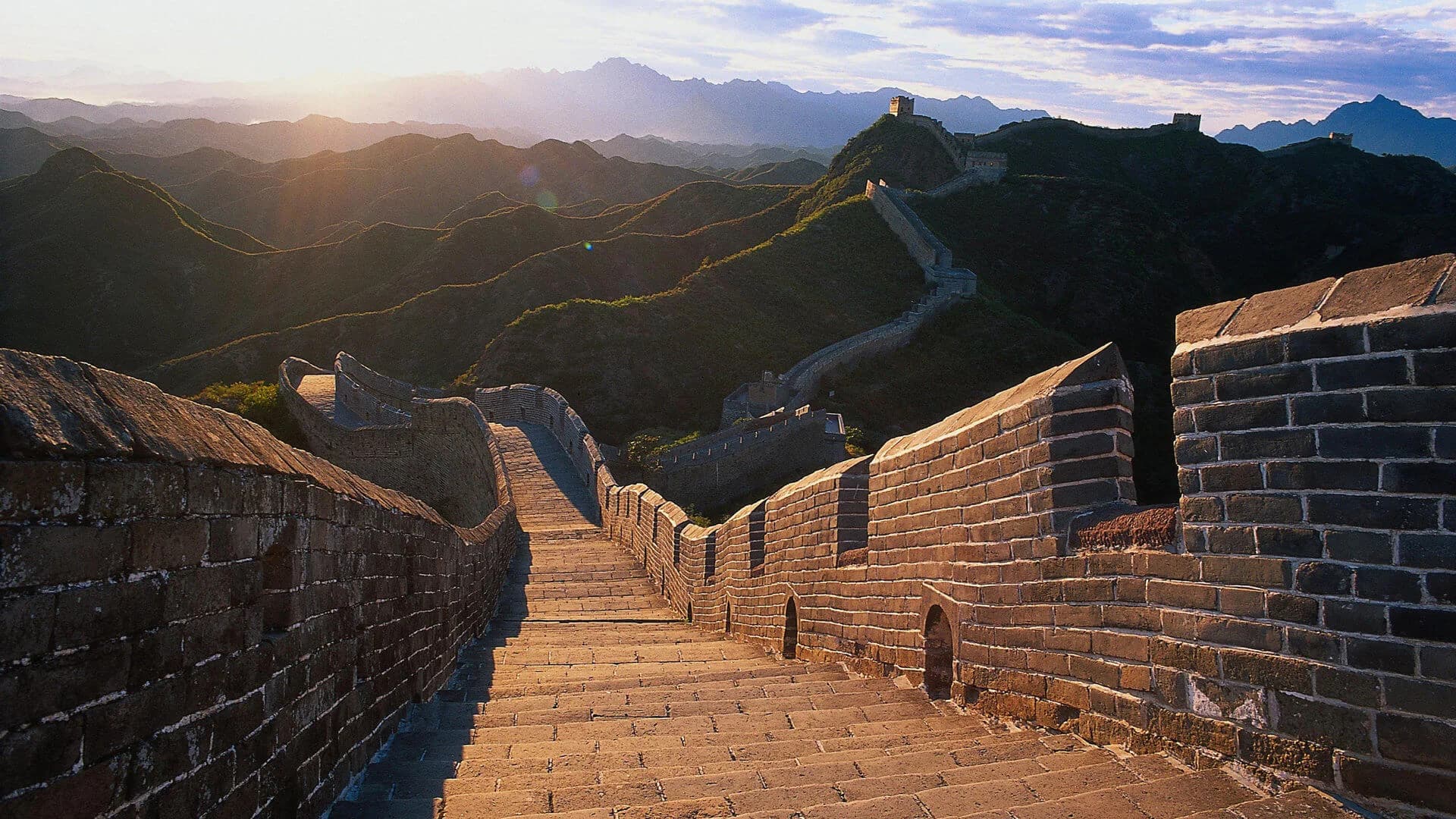
- How a private journey helps: Instead of marching from distant public bus lots, a private vehicle can use the drop-off point closest to the entrance that the site allows. Guides carry lightweight folding seats for rest breaks in shaded courtyards. For the Great Wall, we use Mutianyu, where a cable car carries guests up to the wall with no climbing, so the visit can stay stair-free.
2. Xi'an: Ancient History On Flat Ground
- Mobility level: Low to moderate.
- The reality: The Terracotta Army museum involves a long walk from the main entrance plaza to Pit 1. In peak summer the halls become noisy, humid and tiring.
- How a private journey helps: A private van shortens the approach where the site permits, and an electric cart can be arranged for the park grounds. Inside the pits, ramps and walkways allow a close view without climbing steep steps. Timing the visit early avoids the worst crowds and heat.
3. Shanghai: Cosmopolitan Comfort
- Mobility level: Low.
- The reality: Shanghai is one of the world's most modern cities, with flat waterfront promenades along the Huangpu River and wide, curb-cut sidewalks through the former French Concession.
- How a private journey helps: It is an ideal low-stress finale. Seniors can explore Yu Garden on quieter routes, take an evening Huangpu cruise from a seated cabin and stay in a 5-star hotel with full elevator access and comfortable rooms.
Tier 2: Scenic Extensions (Chengdu And Guilin)
If your parents have 12 to 14 days and a strong wish to see pandas or China's limestone countryside, these two destinations are lovely additions, provided daily logistics are managed closely.
Chengdu: Giant Pandas And Slow Living
- Why it works: Chengdu runs at a visibly slower cadence than the eastern coastal hubs. The Chengdu Research Base of Giant Panda Breeding has wide, bamboo-shaded avenues.
- What to check: Walking the whole park means over two miles of gentle slopes. We arrange the visit early, when the pandas are most active, use the park's electric carts where available, and return to a quiet tea house by early afternoon.
Guilin And Yangshuo: Karst Landscapes From The Water
- Why it works: The best view of the Li River's limestone peaks is from the water, which means no walking while you are aboard.
- What to check: Public river boats are crowded, with busy upper decks and buffet queues. For older travelers we look at a better vessel with assigned seating, a private table for lunch and help at the dock gangways. Docks and boarding points vary, so confirm each one.
Tier 3: High-Risk Destinations And Why Caution Is Essential
When you review destinations on your own, or a standard agent proposal, be careful with these popular regions.
- Zhangjiajie (the "Avatar" mountains): Known for glass bridges and cable cars, it still demands constant stair climbing. Even after the Bailong Elevator, the best viewing platforms are reached along narrow, uneven cliffside paths packed with tour groups. A missed step on wet stone can mean a serious injury.
- High-altitude Yunnan (Lijiang and Shangri-La): Lijiang sits at about 7,900 feet (2,400 meters) and Shangri-La at over 10,000 feet (about 3,200 meters). Altitude sickness can bring a racing heart, poor sleep and heavy fatigue in older adults, especially those taking blood pressure or heart medication. Speak to a doctor before you commit.
- Huangshan (Yellow Mountain): This is a mountain of granite stairs. There are no roads or carts on the summit. After the cable car, every hotel, restaurant and viewpoint means climbing hundreds of steep stone steps.
Tibet belongs in the same conversation because of its altitude, and it needs a separate medical discussion before any booking.
Medical Infrastructure: Protecting Your Parents Overseas
For adult children, the main worry is usually healthcare: _what happens if my father has a cardiac issue, or my mother trips and sprains an ankle?_
Beijing, Xi'an and Shanghai all have large tertiary hospitals, and Beijing and Shanghai also have international hospitals with English-speaking staff. Examples include:
- Beijing: Peking Union Medical College Hospital (international services) and United Family Healthcare.
- Shanghai: Jiahui International Hospital and Parkway Health.
- Xi'an: First Affiliated Hospital of Xi'an Jiaotong University.
On a private journey your local guide is a point of contact throughout the trip. If a traveler feels unwell, the day pauses and a private vehicle takes you to a suitable clinic. Ask any operator to explain exactly how this works, who is on call and how language support is handled. Travel insurance with medical cover is still essential.
How To Choose The Right Route For Your Family
A successful journey for older parents rests on realistic logistics, energy conservation and unhurried pacing.
Instead of trying to see six cities in ten days, choose a route with few city changes, use high-speed trains rather than extra airport days, and plan an early-afternoon return to the hotel for rest.
If you are planning ahead for 2027 and want a balanced itinerary built around aging parents, explore our 10-day senior-friendly private tour. It is designed around low-step transfers, a 3:30 PM return to the hotel, 5-star hotel comfort and 24/7 support, so the trip can be enjoyed with confidence.