Answer Brief
The Answer, Briefly
For adult children planning a China trip for aging parents, mobility and health are often the biggest worries. _What if Dad's knees give out at the Great Wall? Can a wheelchair get around historic sites? How hard is it to reach good medical care if someone falls ill?_
China's modern transport infrastructure is among the most sophisticated in the world. Historic sites, old stone lanes and huge palace grounds, however, still present real physical hurdles.
Real accessibility is not about pretending stairs do not exist. It is about planning sensible workarounds, using private vehicle access where a site allows it, and having a clear medical plan before you travel.
This guide explains what to expect, what to ask any operator, and how we plan trips for travelers with limited mobility or ongoing health needs. It is general planning information and not medical advice. Please talk to your parents' doctor before you book.
>
1. What Accessibility In China Is Really Like
Online you will find two unhelpful extremes: claims that everything is barrier-free, and warnings that China is impossible for older travelers. The reality sits in between.
Modern Transport Is The Easy Part
Many airports, high-speed rail stations, subways and newer museums were built with accessibility in mind. Expect lifts, escalators, level concourses and accessible toilets in many of them. The quality still varies from place to place, and some older stations and sites have stairs. Do not assume; ask.
Historic Sites Are The Hard Part
Centuries-old imperial architecture was built for defense and grandeur, not wheelchair ramps. The Forbidden City has raised wooden thresholds at many courtyard doorways. The Great Wall follows mountain ridges. These places are not out of reach, but they call for a planned route, and some parts may not be possible for every traveler.
2. Sight By Sight: What To Plan For
This table is a starting point for discussion. Conditions at each site change, so we confirm current access with you before you book.
| Sight | What to expect | How we plan around it |
|---|---|---|
| Forbidden City, Beijing | A very large site, stone paving and raised thresholds at many doorways | Choose a selected route rather than every courtyard, take rest stops, and check with you in advance whether a mobility aid is needed for the thresholds |
| Mutianyu Great Wall, Beijing | Mountain terrain with steps on the wall | An enclosed gondola takes guests up to the wall, so the visit can avoid the climb. The wall itself has steps and slopes, so we plan how much time is spent on it |
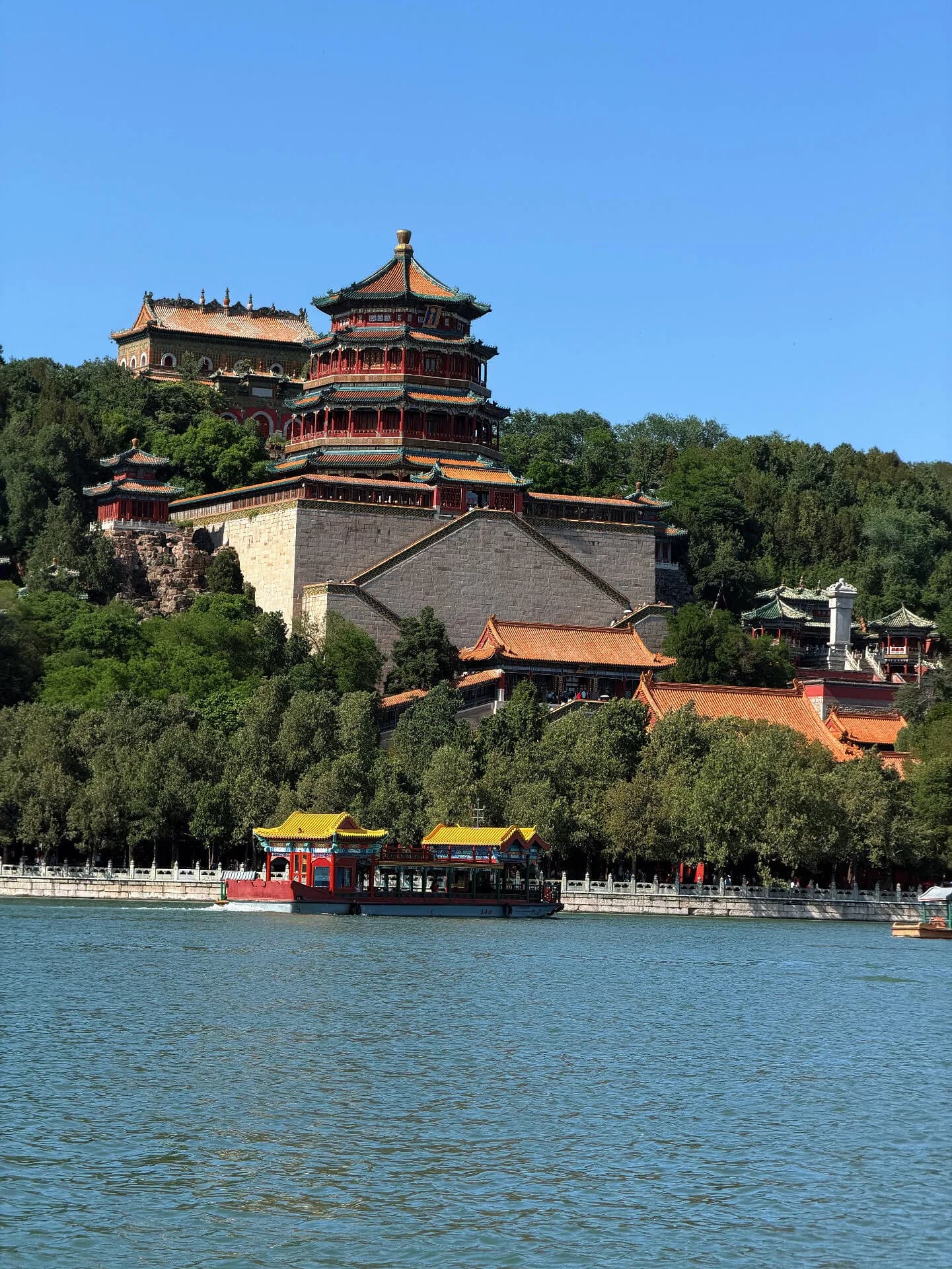
| Summer Palace, Beijing | A large garden with hills around Longevity Hill | Focus on the flatter lakeside areas and consider a boat ride so there is less walking |
| Terracotta Army, Xi'an | A large museum complex with long walks between pits | A private vehicle shortens the approach where the site permits, and an electric cart can be arranged within the park |
| Xi'an City Wall | A raised stone wall reached by stairs or ramps | Access varies by gate, so we check which entrance suits your parents |
| The Bund and Yu Garden, Shanghai | A flat riverfront promenade; narrow paths and stone sills in Yu Garden | Spend time on the promenade, choose the flatter garden courtyards and plan tea stops |
If a traveler uses a wheelchair, tell us before you book. We will discuss each stop honestly, including any that are not suitable.
3. Wheelchairs And Walking Aids
For someone who tires after 15 to 20 minutes of standing, a wheelchair or transport chair can prevent exhaustion and joint pain.
- Bringing your own: A compact folding transport chair is easy to carry and fits in a vehicle's luggage space. Airlines have their own rules for mobility aids, so check yours before you fly.
- Arranging one locally: Ask us whether we can arrange a chair for your dates. We will confirm what is possible in writing rather than assume.
- Guide support: On a private tour your guide and driver can help with loading, ramps and pacing. Please tell us how much help each traveler prefers, so support is discreet and respectful.
4. Prescription Medicines
Keeping your parents' medicine routine steady is essential. General good practice includes:
- Keep medicines in their original labeled packaging.
- Carry a letter from the doctor in English that lists the medicines, their generic names and the conditions they treat.
- Bring enough for the whole trip, plus a few spare days in case of delay.
- Pack medicines in carry-on luggage, not checked bags.
Customs and import rules for medicines can change and differ by medicine, so check the current rules with the Chinese embassy or customs authority, and with your airline, before you travel. Some medicines have special rules.
Water And Food
- Tap water in China is generally not drunk untreated, so we provide bottled or boiled water, and warm water is easy to find.
- Tell us about dietary needs such as low salt or soft foods. We can pass these requests on to the restaurants. Ask your planner what is possible on your route.
5. If Someone Feels Unwell
Large hospitals are available in Beijing, Xi'an and Shanghai. Beijing and Shanghai also have international hospitals and clinics with English-speaking staff. Examples include Peking Union Medical College Hospital (international services) and United Family Healthcare in Beijing, and Jiahui International Hospital and Parkway Health in Shanghai. These are examples for orientation, not a recommendation, and services change, so confirm them with your insurer.
On a private tour, if a traveler feels unwell:
- Your guide pauses the plan and helps the traveler rest somewhere comfortable.
- Your guide contacts our team and helps decide where to go for care.
- The guide can help with registration and translation, and with contacting your insurer.
Ask any operator exactly how this works, who is on call and how language support is handled.
Travel Insurance
We strongly recommend travel insurance with emergency medical cover, including cover for pre-existing conditions, hospital treatment and medical evacuation, and trip interruption. Read the policy carefully and check that it covers your parents' conditions.
6. Frequently Asked Questions
Can a traveler who uses a wheelchair full time do a 10-day China trip? It depends on the person, the sites and the support available, so we review it case by case. Private transport, First Class train seats and carefully chosen routes can make a trip workable, but not every stop will suit every traveler. Tell us before you book and we will give you an honest answer in writing.
What should I look for in an accessible hotel room? Ask about step-free entry, door width, a walk-in shower, grab bars and a bath seat, and the floor surface. Do not rely on a general description; ask for the specific room type and confirm it in writing.
Are accessible toilets available at attractions? Many major attractions, airports, stations and modern shopping centers have accessible toilets, but quality varies. Your guide can plan stops along the route, and it helps to ask us about the places you care most about.
7. Travel With Confidence
Age should not stop anyone from seeing the world. With a realistic route, honest answers about each site, private transport and a clear plan for medical care, many older travelers can enjoy China comfortably.
If you are planning a trip for your family, explore our 10-day senior-friendly private tour. It is designed around a relaxed pace, low-step transfers, a 3:30 PM return to the hotel and 24/7 support, and you can tell us about any mobility needs before we confirm the route.