Answer Brief
The Answer, Briefly
Foreign visitors can use a China SIM card, an eligible travel eSIM, or an international roaming plan. There is no single best option for every passport, phone model or trip length. China’s official visitor guide says foreigners can apply for a SIM at China Telecom, China Mobile or China Unicom service offices with a passport or foreign permanent-resident ID, while plans and data allowances vary by operator.
The practical answer is a two-layer setup: arrange one primary data connection before flying, then keep a second way to contact your hotel, guide or driver if the first connection fails. Test both before a time-sensitive transfer.
In This Guide
Choose The Connection That Fits The Trip
International Roaming
Roaming is the simplest operationally because your number remains familiar and the phone registers automatically when the service is enabled. Check China coverage, data limits, tethering rules, voice charges and the activation date with your carrier. “Global” branding is not proof of China coverage.
Roaming can be useful as a short arrival bridge even when a traveler later uses a local SIM or eSIM. Do not rely on an unconfirmed daily rate.
Travel eSIM
An eSIM can be convenient when the phone is unlocked and supports the required bands and eSIM profile. Confirm that the provider’s plan explicitly covers mainland China, not only Hong Kong or Macau, and check whether the profile is data-only. A data-only line may not supply a local Chinese number for reservations or callbacks.
Install the profile while you still have stable Wi-Fi, but follow the provider’s activation instructions. Keep the original SIM available for two-factor messages if your bank or airline needs it.
Mainland China SIM
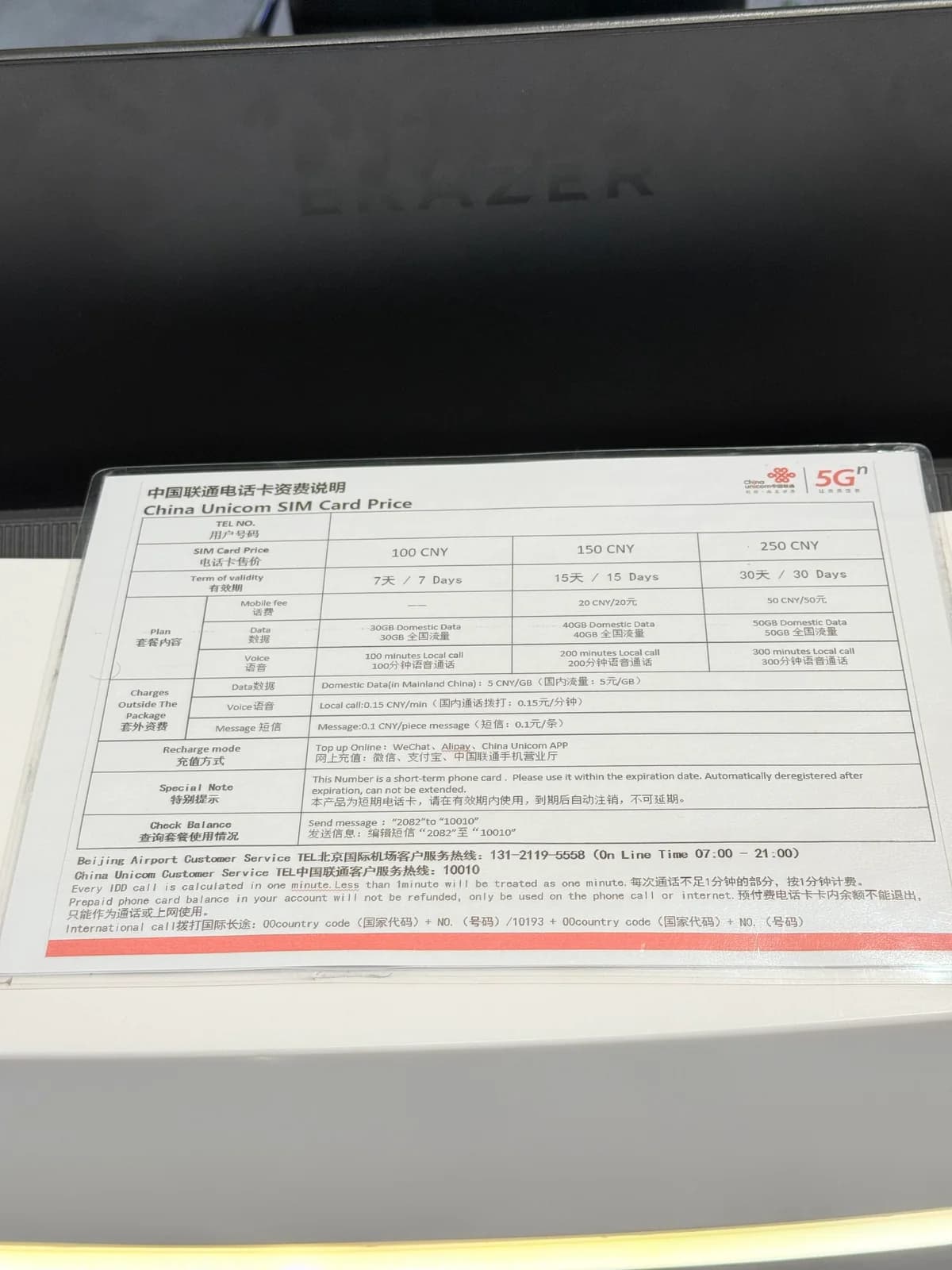
The Ministry of Commerce visitor guide states that foreigners may bring a passport to a telecom operator’s service office to apply for a SIM and activate mobile communication services. Ask about data volume, validity, voice minutes, tethering and what happens when the allowance is exhausted. Carry the passport used for the application.
Airport counters, hotel desks and third-party vendors may offer different products. Confirm the operator, terms and refund process in writing rather than assuming that a tourist package is official or universal.
Prepare The Phone Before Departure
- Confirm the phone is unlocked and compatible with the chosen SIM or eSIM.
- Update the operating system, maps and payment apps while on home Wi-Fi.
- Save hotel names, addresses and AVIORA contacts offline in English and Chinese where possible.
- Download boarding passes, rail confirmations and arrival instructions as PDFs or screenshots.
- Record the SIM’s ICCID, eSIM activation steps and carrier support number.
- Tell your bank which phone number will receive security checks.
Do not delete your home line until you have confirmed that important account messages still arrive. On dual-SIM phones, label the lines clearly and disable data switching that could create unexpected roaming charges.
What “Internet In China” Means In Practice
A working data signal does not guarantee access to every service you use at home. Some international websites, social networks and messaging services may be unavailable or behave differently in mainland China. A traveler should not treat a VPN as a guaranteed service, and should check the law and terms that apply to their own use.
For a private route, the most important offline information is usually simple: the next hotel’s Chinese address, the driver’s phone number, the guide’s meeting point, train details and the local emergency numbers. AVIORA can provide a written route sheet, but the traveler should keep it on the phone and on paper.
Data For Payments And Transport
Alipay, Weixin Pay and ride-hailing tools require a stable connection at the moment of use. China’s official guide recommends registering payment apps with a foreign or Chinese mobile number and binding supported overseas cards. Keep the wallet tested, an international card available and some RMB cash as backup; a SIM is only one part of the reliability stack.
Maps and transport apps can also need location permission and data. Before leaving the hotel, load the destination, station or airport route. At a large station or airport, a screenshot of the Chinese place name can be more useful than a map pin that fails to load.
Airport Arrival And Support
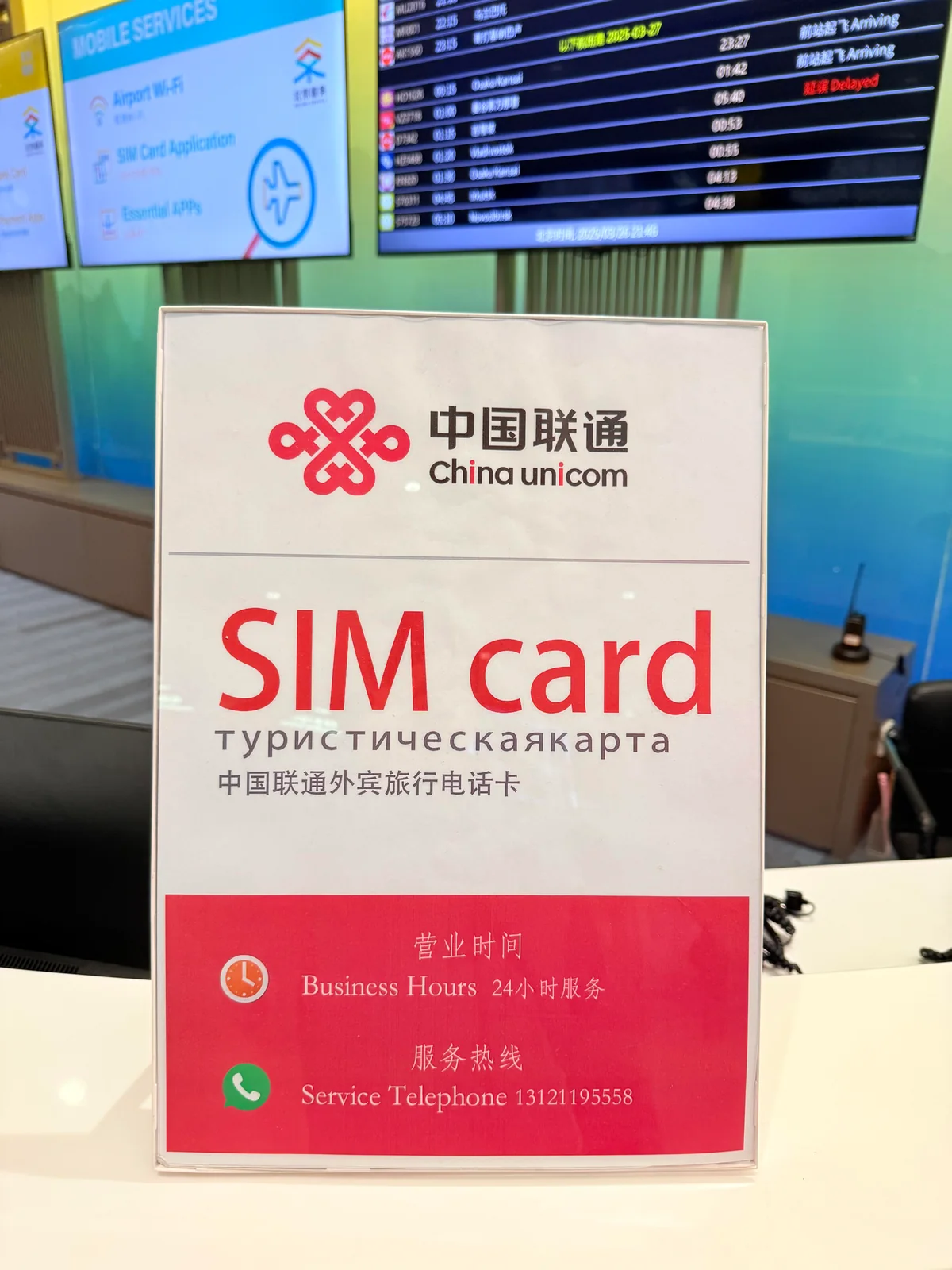
At an airport, prioritize the first connection that gets you to your confirmed driver or hotel. If the chosen eSIM does not activate, connect to airport Wi-Fi where available and use the written contact sheet. If you buy a local SIM, use an official operator counter or a clearly identified service office, keep the receipt and check that the line can make the calls your itinerary requires.
AVIORA’s planning FAQ covers connectivity alongside payments, transport and practical arrival questions. The Shanghai destination guide and Beijing destination guide then place the data plan inside a city-specific arrival sequence.